

Artist
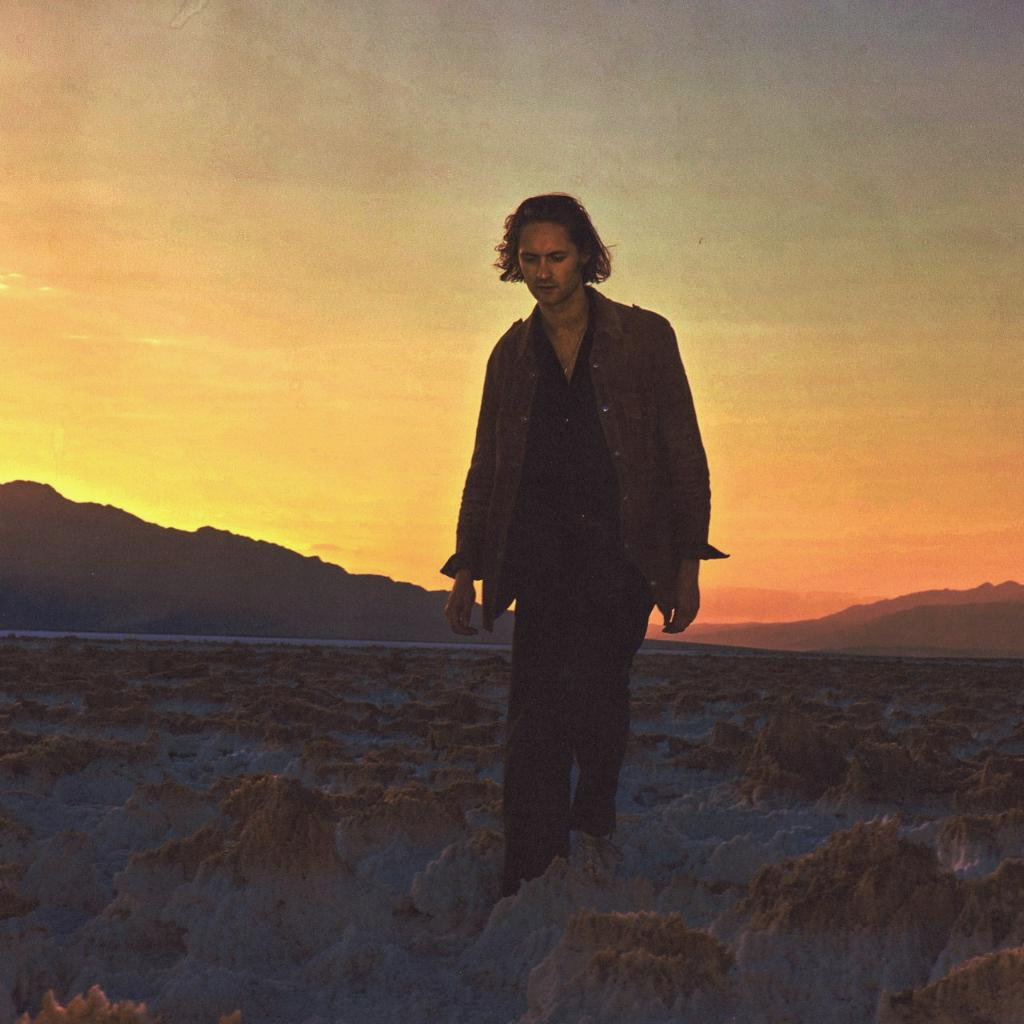
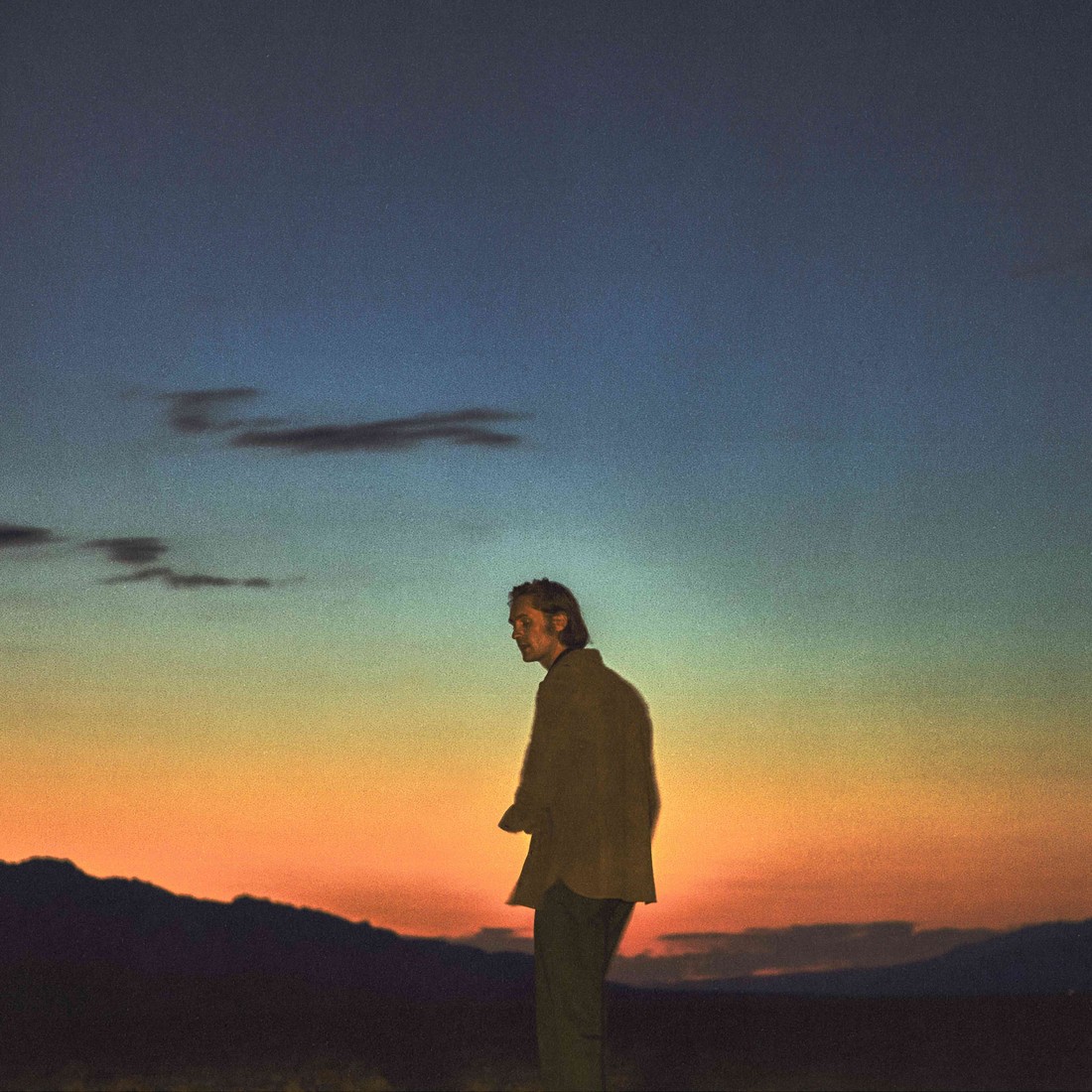
IMAGES: To download, click above. Press Photo Credit to Wes Ellis
EMAIL THE PUBLICIST
“Fortune and Her Orchestra” Video
Website
Bandcamp
Spotify
Tidal
Apple Music
YouTube
Instagram
Facebook
Miles Hewitt
Far West Records
Vainglory bio by Andy Cush:
It’s tempting to stay small as a singer-songwriter in 2026. Gone are the days of the bard with his guitar surveying the landscape, squinting at the ghosts in their hiding-places, delivering tidings. No longer holding his privileged place at the center of a culture aswirl with short-form video and infinite subgenres, it’s safer to remain humble, look inward, pick at his own insecurities in the hopes of finding a sliver of something universal there.
Miles Hewitt must have been daydreaming when that memo went out. Vainglory, the Brooklyn musician’s second solo album (out July 24 via Far West Records), is the sort of ambitious, outward-looking singer-songwriter record they don’t make much anymore. Its subject is no smaller than man’s search for meaning in the age of ubiquitous data, late-capitalist rot, and the false mysticism of A.I. in ascent.
The prognosis, from the outset, could not be more grim. “Feed the void with dollars / Feed the dollars with death / Feed the death with yet more death / ’Til nothing’s drawing breath,” go the album’s chilling first lyrics. Yet there is a note of optimism in Hewitt’s raspy tenor, and in the music’s gentle sway. His strummed acoustic guitar guides an ensemble whose sound is both lush and transparent, classic and contemporary, sprawling and focused, with pedal steel lines like tendrils of sunlight and synth pads like reflecting pools.
Hewitt is a DIY touring vet who has played supporting roles with artists like Jana Horn, Anne Malin, and Lefty Parker; his previous album, 2022’s Heartfall, was named one of the best albums of that year by the Boston Globe. For Vainglory, he assembled an all-star band to help realize his vision, including bassists Brian Betancourt (Destroyer, Cass McCombs) and Julian Cubillos (Will Sheff, Alena Spanger); drummers Sean Mullins (Hannah Cohen, Andy Shauf), David Christian (Mary Timony, Cut Worms), and Jason Burger (Scree, Half Waif); pedal steeler/guitarist Jack McLoughlin (Dougie Poole, Willow Avalon) keyboardist Michael Coleman (Sam Evian); and multi-instrumentalists Katie Von Schleicher (Youbet, Frankie Cosmos) and Nate Mendelsohn (Yaeji, Vagabon). It was a family affair, with the latter three musicians contributing to engineering and many other players dropping in on the sessions.
Vainglory’s songs have their roots in a long DIY solo tour of the southwestern U.S. Hewitt undertook in 2023, coloring the lyrics of endless wandering within vast expanses. But while the writing was instinctive, the recording, Hewitt admits, was almost pathologically meticulous. Getting to a finished song might involve multiple takes recorded across months with different ensembles, or calling up the same musicians to have another go at a track they thought was finished, then realizing three versions later that there was something special about the synth part on the first one, and slicing that out and carefully editing it to fit the new tempo. “There was just a lot of, No, it can be bleaker than this, it can be more lonesome than this,” Hewitt says with a touch of self-deprecation about the mood he sought to capture. “But I wanted the music to be as true to itself as it could possibly be. It was one of those man-loses-mind, man-versus-self-in-the-studio albums, for sure.”
The tinkering paid off. Vainglory is a marvel of texture and arrangement, with D. James Goodwin’s mix weaving all manner of sounds into a holistic nocturnal atmosphere, from the stately folk-rock of “Blackness is the Road” to the surprisingly lithe digi-funk of “Say Goodbye,” a meditation on life’s transience that plays like a 21st-century update on Tim Buckley’s or Labi Siffre’s mid-’70s fusions of singer-songwriter poetics and R&B rhythm. Elsewhere, Vainglory might remind you of Destroyer’s wild-eyed jeremiads, Neil Young’s rawboned melodicism, Gene Clark’s tortured symphonics, even Pink Floyd’s psych-rock in the sense of psychological rather than psychedelic.
Hewitt’s writing is full of air-raid whistles, ambulance lights, and solitary wanderers through an unforgiving age. But he also returns again and again to love, mystery, and music as paths toward redemption – paths so entwined they may as well be one and the same. Opener “Fortune and Her Orchestra” appropriates its title from the oddly poetic gibberish of a spam bot comment he encountered beneath a news article, a way of “stealing back” from an AI superstructure that aims to absorb all of human expression as training data. Taking in the wreckage of contemporary society, the song zooms in for a few poignant bars on a musician in Nashville, “[singing] for her supper” and eking out a few moments of transcendence from her “bittersweet rhythm and blues.”
Hewitt returns to a similar scene near Vainglory’s end, on the astonishing “Rock Me, Baby,” a 12-minute hymn to artistic inspiration and community that contains the album’s most direct expressions of hope. The song has fallen apart and reassembled itself at least once by the time it reaches a verse about a touring musician on the DIY house-show circuit. He’s no savior, no prophet – it’s not even clear, through the sly elisions of Hewitt’s storytelling, whether we should think of him as a particularly special talent. But through the stubborn human persistence of the creative act, carried out despite meager rewards, in the face of a culture that either neglects or seeks to pervert and destroy it, he manages to transmit something important to the small scene gathered around him. “It’s that old-time drifter deal,” Hewitt sings, assuming the hipsterish patter of a voice in the crowd for a moment. “For a folding chair and some floor for the night / He’ll show you something very real.” The music, reduced for a time to the archaeological crackle of a long-lost field recording, comes brightly to the fore once again: strings and woodwinds swirl; a banjo does its down-home dance.
Though Hewitt may not have intended it from the beginning, the years-long labor of recording Vainglory – the search for a sound that could feel in some way like the truth – began to feel like a manifestation of the music’s themes. “It became a kind of self-fulfilling prophecy,” he grins. “It’s one thing to make an album about wandering, seeking, searching for the transcendent. But eventually I really was wandering a desert of my own design.”
More than that, the album is an expression of the communal and artistic ideals that Hewitt’s songs identify as pathways out of the wasteland: a work of beauty and strangeness that could have only arisen from its particular cast of collaborators, with countless shards of individual sensibility combining into a whole greater than the sum of its parts. He recoils at the thought of a future – really, the very present he sings about – when a songwriter like him might simply type “pedal steel” as an AI prompt rather than working together with a peer.
Vainglory is a lot of things: a journey through the desert, a collection of nightmare visions set to beautiful tunes, a call to resist your soul’s absorption by machines. It’s also, Hewitt says, “a celebration of what people can do if they get together and work really hard.”